Jordan Chark
Linguist. Semantics/Pragmatics/Sociolinguistics. (She/her; Sie; Hún)
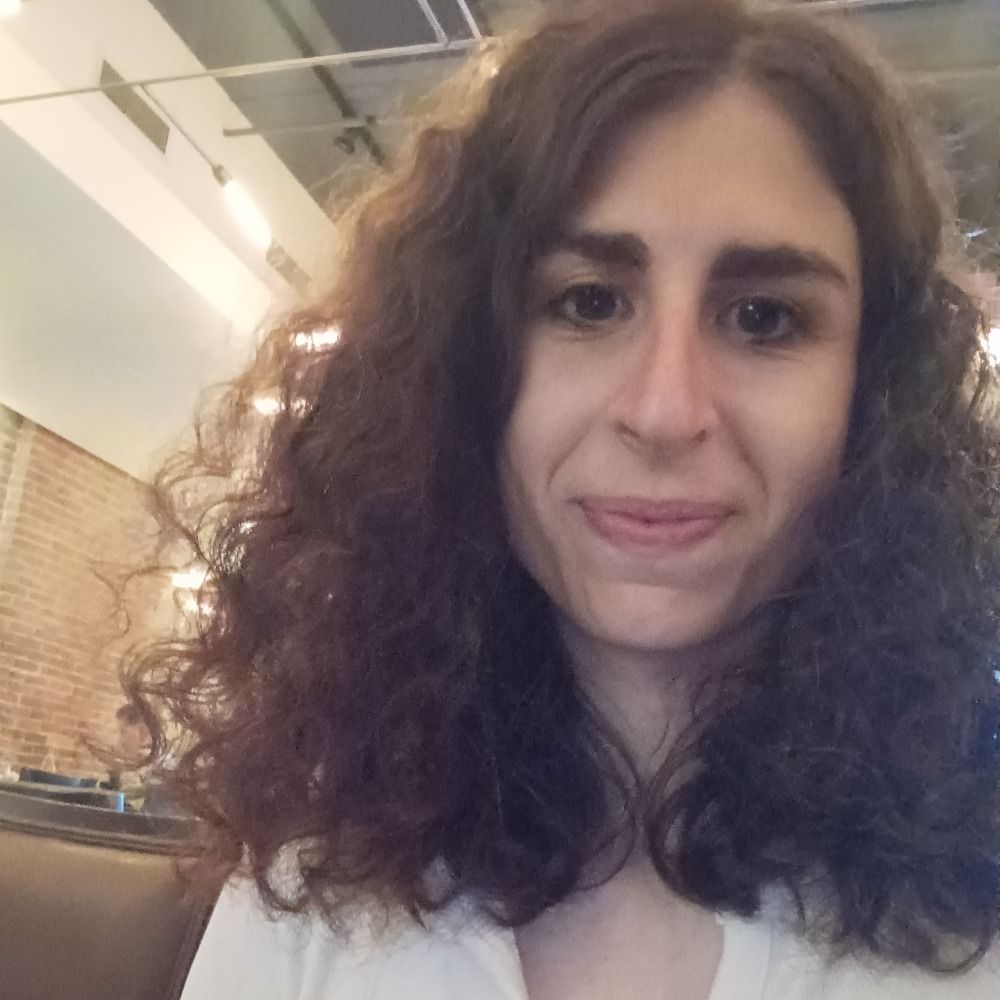
I am part of the scientific staff (wissenschaftliche Mitarbeiterin) at the institute for German language and linguistics (Institut für deutsche Sprache und Linguistik) at the Humboldt-Universität zu Berlin, associated with the Collaborative Research Centre (DE: Sonderforschungsbereich) 1412 “Register” (Project A10; PIs Viola Schmitt and Artemis Alexiadou).
My primary research interests are formal semantics/pragmatics, sociolinguistics and the interfaces between them. My work often incorporates a diachronic dimension; I strongly believe that such a perspective strengthens the analysis of any linguistic phenomenon.
In Project A10, we are interested in seemingly optional morphosyntactic doubling (e.g. two comparative morphemes in more taller) and the consequences thereof for our understanding of how situational dimensions interface with the choices speakers make from sets of available alternatives. Doubling results in more redundancy, which we hypothesise ought to be advantageous in situational contexts involving some degree of uncertainty regarding the question-under-discussion.
Before coming to HU, I was a doctoral researcher for three years at the Leibniz-Centre for General Linguistics (ZAS) in Berlin, also affiliated with CRC 1412. My dissertation project concentrated on understanding how register-specific alternations can emerge, focusing on a case study from the diachrony of Icelandic.
Prior to that, I did an MSc. in General Linguistics at the University of Potsdam. I did my undergraduate studies at the University of Iceland, where I developed a nascent interest in historical linguistics, linguistic variation and language ideology.
Contact: jordan.chark [AT] hu-berlin.de
selected publications
-
Discourse structure and the reorganisation of the Icelandic aspectual systemOpen Germanic Linguistics 2025
-
A perfect-like stative: Icelandic ’búinn að’ and pragmatic competition in the aspectual domainProceedings of Sinn und Bedeutung Nov 2023
-
Homogeneity and universal quantification in embedded questionsIn Proceedings of Sinn und Bedeutung 2021